
Protecting West Palm Beach Driveways from Salt Air Corrosion
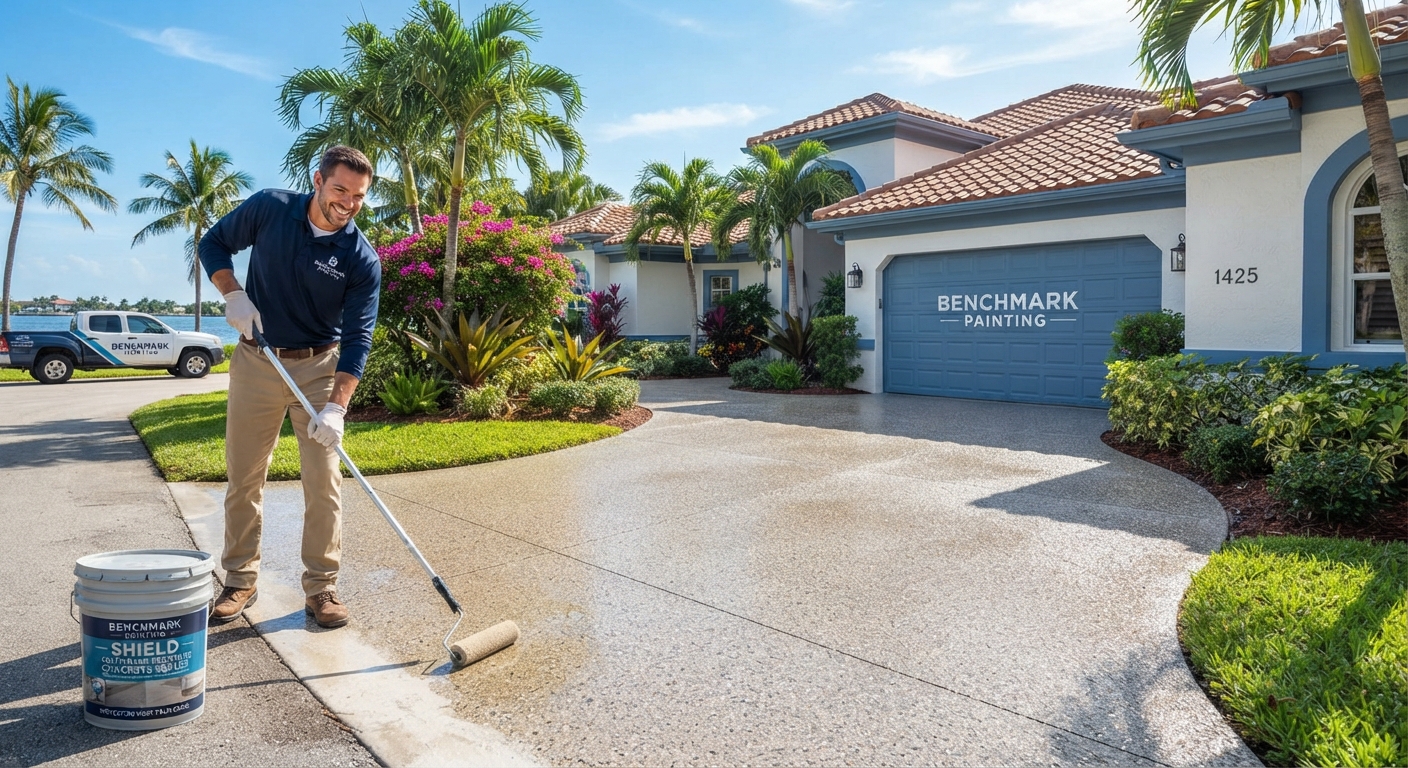
Walk down almost any street near the West Palm Beach coastline and you’ll spot it: driveways with a chalky, pitted surface, hairline cracks spreading from the edges inward, and a dull, worn look years before they should show any real age. It’s not bad luck and it’s not poor construction it’s salt air, and it’s one of the most underestimated threats to concrete in South Florida.
At Benchmark Painting, we’ve worked on homes throughout West Palm Beach and the surrounding coastal communities, and driveway deterioration from salt exposure is one of the most common concerns we hear from homeowners. The good news is that it’s also one of the most preventable, with the right concrete driveway coating applied at the right time.
Why Salt Air Is So Hard on Concrete Driveways
Concrete is porous by nature, which means it absorbs moisture and along the coast, that moisture carries salt. Over time, this creates a slow but relentless cycle of damage:
- Salt crystallization. As salt-laden moisture evaporates from the concrete’s surface, it leaves salt crystals behind inside the pores. Those crystals expand, creating internal pressure that gradually breaks down the concrete from the inside out.
- Corrosion of embedded rebar. Many driveways are reinforced with steel rebar or wire mesh. Salt-laden moisture that penetrates deep enough can reach that reinforcement and cause it to rust and expand, which is a major driver of the wide, spreading cracks you often see on older coastal driveways.
- Surface pitting and spalling. The freeze-thaw-style pressure caused by salt crystallization (even without literal freezing, thanks to repeated wet-dry cycles) causes small chips and flakes to break away from the surface, known as spalling.
- Faster wear from humidity and UV combined. West Palm Beach’s year-round humidity keeps concrete more consistently saturated than drier inland climates, while intense UV exposure simultaneously dries and stresses the surface a combination that accelerates almost every form of concrete deterioration.
Signs Your Driveway Is Already Being Affected
- A chalky, powdery residue on the surface (a process called efflorescence, caused by salt deposits)
- Small pits or divots scattered across the surface
- Hairline cracks that seem to be slowly widening or spreading
- Rust-colored staining, which often indicates the reinforcement underneath has begun corroding
- A rougher, more porous feel underfoot compared to when the driveway was new
If you’re noticing any of these signs, it’s worth getting ahead of the problem before repairs become more extensive and more expensive.
How a Concrete Driveway Coating Protects Against Salt Damage
A properly applied concrete driveway coating acts as a barrier between your concrete and the salt-laden moisture that causes this kind of damage. Rather than allowing water to soak into the porous surface, a quality coating:
- Seals the surface, dramatically reducing how much moisture (and the salt it carries) can penetrate into the concrete
- Protects embedded reinforcement by limiting the moisture that would otherwise reach and corrode rebar or mesh
- Resists UV degradation, keeping the surface from becoming brittle and prone to cracking under South Florida’s intense sun
- Reduces surface pitting and spalling by preventing the salt crystallization cycle that causes it in the first place
- Extends the driveway’s usable life significantly, often by a decade or more compared to an untreated surface in the same coastal environment
What to Look for in a Coating for Coastal Properties
Not every concrete coating product is suited for direct salt air exposure. For West Palm Beach homes, especially those near the Intracoastal or ocean, look for:
- A coating specifically rated for high-moisture, coastal environments rather than a general-purpose sealer
- UV-stable formulations that won’t yellow, chalk, or break down prematurely under constant sun
- Breathable coating systems that still allow trapped moisture to escape, preventing pressure buildup underneath the coating itself
- Professional surface preparation before application, since a coating applied over existing salt contamination or surface damage will fail far sooner than one applied to a properly cleaned and prepped surface
Our concrete coating services are specifically selected and applied with South Florida’s coastal conditions in mind, rather than a one-size-fits-all approach borrowed from inland climates.
How Often Should Coastal Driveways Be Recoated?
This varies based on proximity to the water, sun exposure, and the quality of the original coating, but as a general guideline:
- Direct oceanfront or Intracoastal-adjacent properties typically need recoating every 2-3 years to maintain full protection
- Homes within a mile or two of the coast can often stretch to 3-5 years between recoats, depending on exposure
- Properties further inland may see longer intervals, though West Palm Beach’s overall humidity still accelerates wear compared to drier regions
Routine inspection is the best way to know for sure catching early wear before it becomes structural damage is always more cost-effective than a full driveway replacement.
Frequently Asked Questions
How long does a concrete driveway coating last in a coastal environment?
A quality coating properly applied to a well-prepped surface typically lasts 3-5 years in most West Palm Beach locations, though direct oceanfront exposure may shorten that timeline and require more frequent maintenance.
Can a coating fix a driveway that already has salt damage?
A coating can halt further deterioration and protect the surface going forward, but existing cracks, pitting, or spalling typically need to be repaired first. Coating over damaged concrete without proper prep will not produce lasting results.
Is a concrete driveway coating worth it for homes not directly on the water?
Yes while oceanfront and Intracoastal properties see the fastest damage, salt air travels well beyond the immediate waterfront throughout West Palm Beach, and most homes in the broader area benefit from protective coating over time.
How long does the application process take?
Timelines vary by driveway size and the extent of surface preparation needed, but most residential driveway coating projects are completed within a few days, including prep, application, and cure time.
Protect Your Driveway Before Salt Air Does More Damage
Salt air damage doesn’t happen overnight, but it also doesn’t stop on its own every season without protection is another season of slow, compounding wear. A properly applied concrete driveway coating is one of the most cost-effective ways to protect your investment and avoid a far more expensive full replacement down the line.
As a trusted provider of West Palm Beach concrete coatings, Benchmark Painting understands exactly what coastal exposure does to concrete and how to protect against it correctly the first time. Our concrete coating services start with a full assessment of your driveway’s current condition, so you know exactly what you’re working with before any coating goes down. Contact us today for a free consultation and let’s get your driveway protected before another salt season takes its toll.
