
Why Is My DIY Garage Floor Coating Peeling Up From Hot Tires?
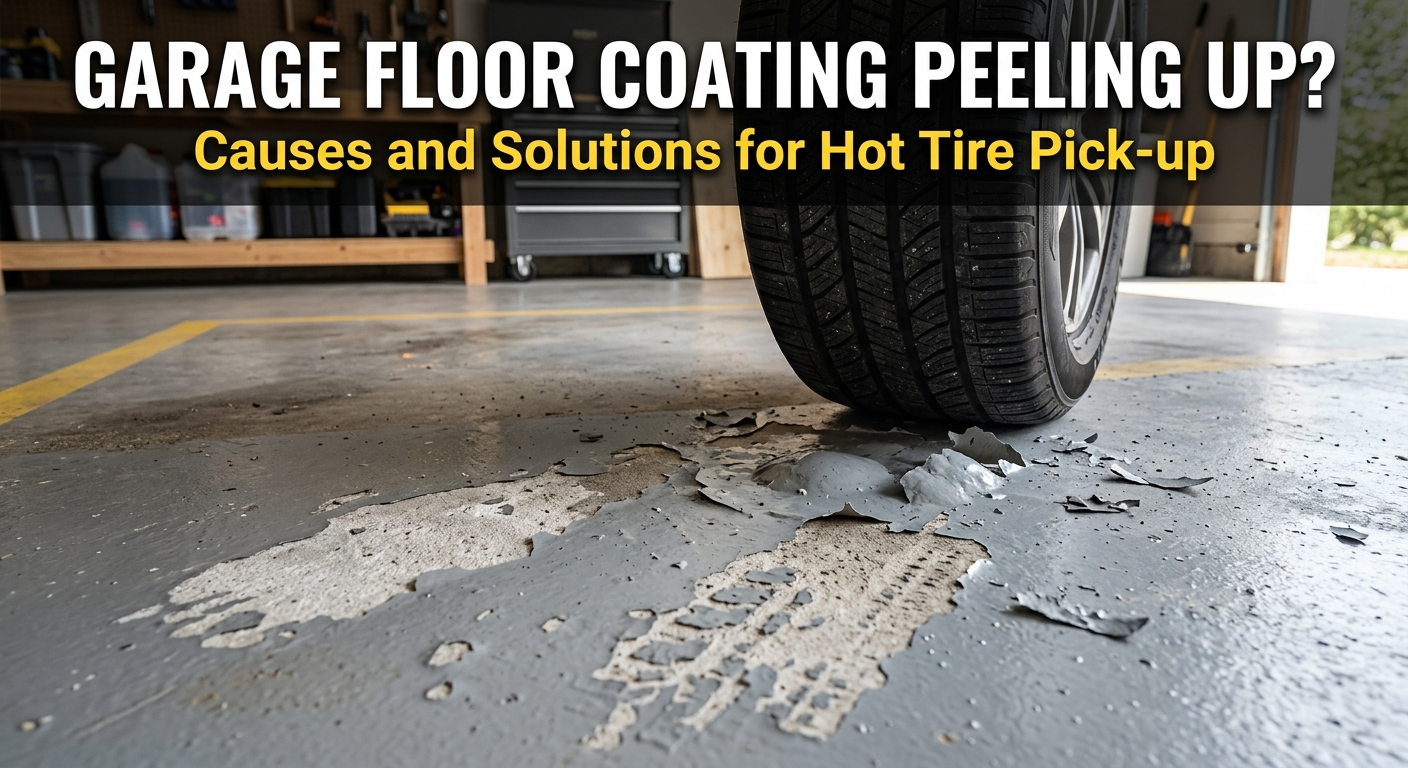
Spending a weekend rolling a fresh coat of paint or epoxy onto your garage floor feels like a satisfying win until you pull your car in after a drive, park overnight, and wake up to find the coating peeling away with your tires. This frustrating issue is known as hot tire pickup.
When a diy garage floor coating peeling defect occurs, it compromises the aesthetic and protective layer of your concrete slab. Understanding why hot tire pickup happens helps you choose the right surface prep and materials to avoid repeating costly mistakes.
What Causes Hot Tire Pickup?
Hot tire pickup happens when the bond between your floor coating and the concrete slab breaks down under thermal stress and mechanical friction.
When you drive your car, friction heats up the tires. Once parked in your garage, those hot tires press down directly onto the floor surface. As the rubber cools down, it naturally contracts and grips the coating tightly. If the adhesion strength of your coating is weaker than the gripping force of the cooling rubber, the coating lifts right off the concrete.
Common contributing factors include:
- Low-Quality Materials: Many DIY kits utilize water-based acrylics or low-solids epoxy formulas that soften easily when exposed to warm automotive rubber.
- Moisture Vapor Emission: Concrete continuously releases moisture vapor. Without a proper vapor barrier, moisture builds pressure underneath, causing garage floor paint lifting over time.
- Premature Usage: Parking a vehicle before the product has fully cured prevents proper chemical cross-linking, leaving the surface vulnerable to immediate failure.
The Fatal Flaw of DIY Kits: Surface Preparation
The primary reason DIY garage floor coatings fail isn’t just the chemical product, it’s how the surface was prepared.
Achieving a permanent bond requires an open, textured concrete profile. Most DIY kits include simple acid-etching solutions. While acid washing cleans surface dirt, it often fails to remove old sealers, grease, or latitude (the weak top layer of cement paste).
Without proper prep work, the coating merely sticks to surface dust. This lack of deep mechanical adhesion often results in structural surface damage, requiring comprehensive spalled concrete repair before any new floor system can be installed.
How to Prevent Hot Tire Pickup Permanently
Fixing a peeling garage floor requires removing the damaged material, preparing the slab correctly, and upgrading your coating chemistry.
1. Complete Coating Removal
All loose, flaking paint must be stripped completely using scrapers or mechanical grinders. Leaving old product behind will compromise new applications.
2. Mechanical Diamond Grinding
Unlike mild acid washes, professional installers use heavy-duty diamond grinders to open the pores of the concrete. This creates an anchor profile that allows new coatings to lock in mechanically.
3. Apply High-Performance Systems
Standard DIY products soften under heat, leading to repeated failure. Upgrading to industrial-grade concrete coatings provides superior thermal resistance, UV stability, and bond strength built to handle hot tires.
Investing in premium concrete coatings ensures long-term protection against heavy vehicle traffic, oil spills, and severe temperature shifts.
Restoring Your Garage Floor
If your floor is already peeling, patching individual spots rarely provides a long-term solution. To achieve a smooth, durable finish that won’t lift under hot tires, the entire surface must be properly prepped and sealed. Exploring professional floor coating options will help you select the ideal coating system tailored to your garage’s specific demands.
Frequently Asked Questions (FAQ)
Can I just touch up the spots where the tire peeled the paint?
Spot repairs rarely hold up over time. Because hot tire pickup usually indicates general adhesion failure across the slab, surrounding areas will likely peel soon after. A full strip and recoat is recommended.
How long should I wait before parking on a new floor coating?
Drying times depend on the material used. Water-based store-bought paints often require 3 to 7 days to cure, whereas professional polyaspartic coatings cure rapidly and are usually ready for vehicle traffic within 24 hours.
Are all epoxy garage coatings susceptible to hot tire pickup?
No. Water-based DIY kits are vulnerable, but 100% solids industrial epoxies and polyaspartic coating systems are specifically engineered to withstand heat, friction, and heavy loads without lifting.
