
How to Tell When Your Commercial Property Is Overdue for Painting
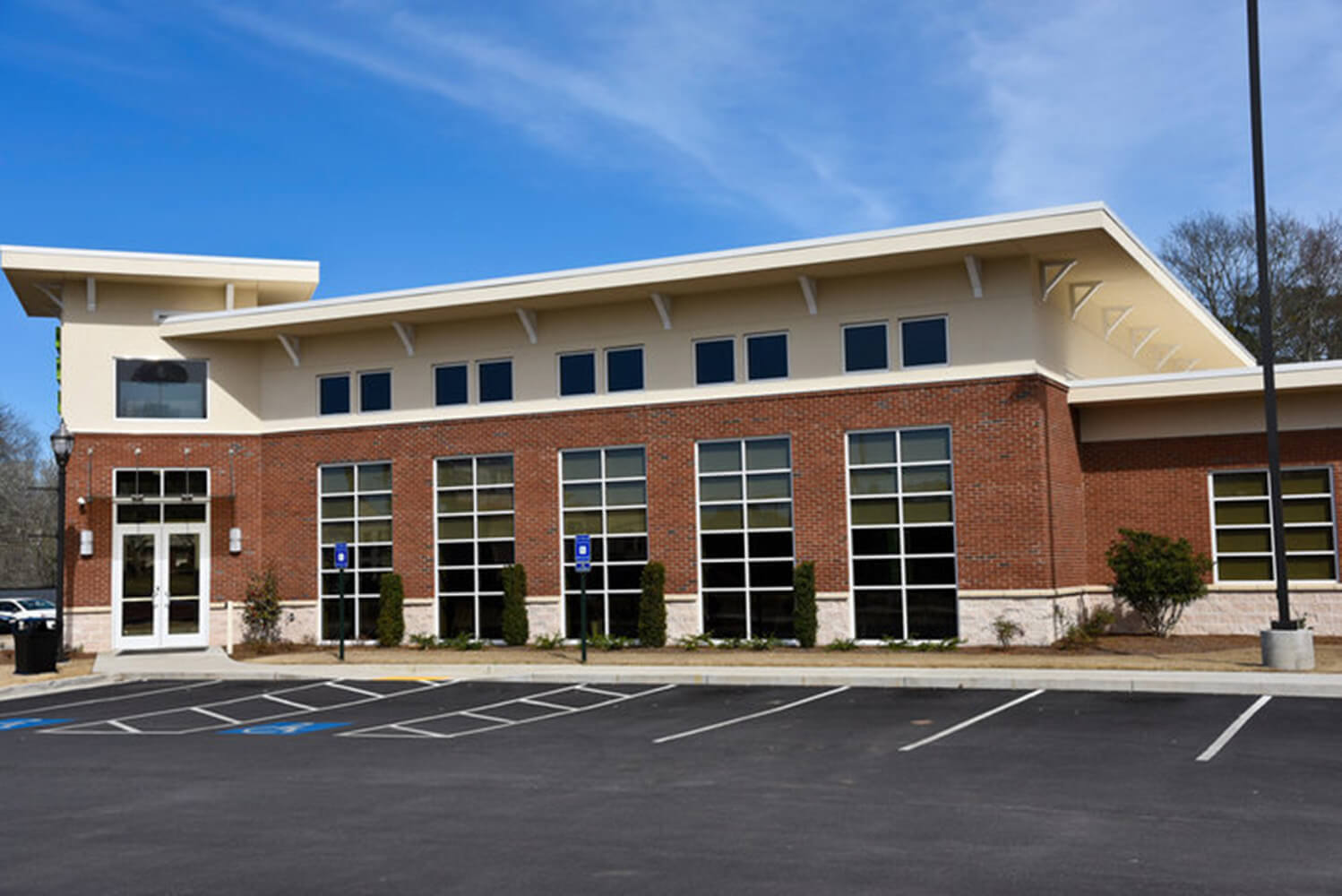
Most commercial property owners do not notice paint failure while it is still easy to address. By the time something looks obviously wrong from the parking lot, the deterioration has usually been building for months. That is the nature of exterior paint failure — it progresses gradually, and each stage makes the next one harder to ignore.
In South Florida, that progression moves faster than most property owners expect. The same building that looked sharp two years ago can show real signs of wear today, not because it was poorly painted, but because the climate here puts exterior surfaces under sustained stress that accelerates breakdown compared to most other regions.
Knowing how to tell when a commercial property needs painting means understanding what failure actually looks like at each stage — before it crosses from a maintenance issue into a repair problem. This guide walks through the specific signs that indicate a commercial exterior is overdue, why South Florida conditions make them appear sooner, and what the cost of waiting looks like when those signs get ignored.
Why South Florida Accelerates Paint Failure on Commercial Buildings
Paint failure on a commercial building in South Florida is not a question of if — it is a question of when. The region’s UV index ranks among the highest in the country, and commercial buildings absorb that exposure across large, unshaded wall surfaces all day. That sustained UV load degrades paint film faster than most maintenance schedules account for.
Humidity and rain compound the problem. South Florida’s combination of heat and moisture creates conditions where any weakness in the paint surface becomes an entry point. Water works into compromised areas, softening adhesion and accelerating breakdown from behind the paint film. Salt air adds another layer of stress, particularly for properties within a few miles of the coast, where airborne salts deposit on exterior surfaces and work against the paint continuously.
Commercial buildings also present a scale challenge that residential properties do not. A larger building means more total surface area exposed to these conditions, and more variation in how different elevations weather. A north-facing wall and a south-facing wall on the same building can be at very different stages of deterioration at the same time.
The result is a repainting cycle that catches many property owners off guard. A maintenance interval that makes sense in a cooler, drier climate will fall short here. Property owners who rely on general timelines rather than actual condition often find themselves looking at a building that is well past due.
Signs Your Commercial Property Is Overdue for Painting
Any one of the following signs warrants a closer look. More than one appearing together is a strong signal that the building is past due — and that the window for a straightforward repaint may be closing.
Chalking and Powdery Residue
Chalking is typically the first sign of paint failure, and it often goes unnoticed until it has been progressing for a while. It appears as a fine, powdery residue on the wall surface — most visible when rain streaks it downward in pale trails or when a hand run across the wall comes away dusty.
In South Florida’s UV environment, chalking appears faster than owners expect. The binder in the paint film breaks down under sustained UV exposure, and what is left behind is the pigment residue sitting loosely on the surface. The wall may still look acceptable from a distance. Up close, it is already failing.
Chalking is not cosmetic. It means the paint film has lost integrity and is no longer protecting the substrate the way it was at application.
Fading and Uneven Discoloration
Fading is the most visible sign of UV degradation. On commercial buildings it tends to concentrate on the elevations with the most direct sun exposure:
- South-facing walls receive the most sustained UV load throughout the day
- West-facing walls take intense afternoon sun, often the most damaging exposure
- North-facing walls may still look close to original while other sides of the same building are visibly faded
Uneven discoloration is a related but distinct issue. When different sections of the same wall read as different shades, it typically points to inconsistent original application, localized areas where degradation has moved faster, or spot repairs that were touched up without a full repaint. From a distance, it reads as neglect — regardless of the cause.
Peeling, Cracking, or Flaking Paint
Peeling and cracking mean the paint film has lost adhesion to the substrate. In South Florida, moisture is usually the driver. Water works into any compromised area of the surface, gets beneath the paint film, and separates it from the wall.
Cracking that follows a networked pattern — sometimes called alligatoring — indicates that the paint has hardened and lost flexibility through repeated heat and moisture cycles. The surface expands in the heat and contracts as it cools, and a paint film that has lost elasticity cannot keep up with that movement.
These are not surface-level problems. Once the paint separates from the substrate, the building material underneath is exposed directly to UV and moisture, and the damage accelerates from that point forward.
Mildew and Algae Growth
Dark streaking, greenish patches, or black spotting on exterior walls in South Florida is almost always mildew or algae growth. The climate creates near-ideal conditions for biological growth on exterior surfaces — heat, humidity, and frequent rain are all it needs.
Mildew growth signals more than a dirty surface. It typically means the paint’s mildewcide additives have been depleted through age and weathering. A building that develops mildew staining has paint that is no longer performing.
On commercial properties, this matters beyond the surface condition. Mildew staining is visible from a distance and has an outsized effect on how the property reads to tenants, customers, and visitors walking toward the building.
Visible Surface Damage Beneath the Paint
When paint failure reaches its end stage, the substrate beneath becomes exposed. On commercial stucco, this appears as:
- Bare patches where the paint has separated completely
- Soft or crumbling areas where moisture has worked into the stucco itself
- Surface erosion that leaves the wall visibly uneven
At this point the project scope has grown beyond a standard repaint. The damaged substrate needs to be addressed before any new coating is applied. That work adds time and cost to the project — and the difference is significant. A building caught at the chalking or fading stage is a maintenance expense. A building that has reached visible substrate damage is a repair and repaint project, and the gap between those two scopes is wide.
What a Deteriorating Exterior Communicates to Tenants and Customers
A commercial building’s exterior is not just a surface — it is the first impression the property makes on everyone who approaches it. Paint failure at any stage signals that the building is not being actively maintained, and that signal lands before anyone walks through the door.
For tenant-occupied properties, that impression has real consequences. Tenants evaluate their environment continuously, not just at lease signing. A building that starts looking worn during a lease term gives tenants a reason to question whether ownership is attentive. It creates leverage in renewal negotiations that would not otherwise exist. In competitive rental markets, a deteriorating exterior accelerates vacancy by making the decision to leave easier to justify.
The stakes are similar for customer-facing businesses. A faded, stained, or peeling facade sets an expectation before a single interaction happens. Customers draw conclusions about a business from its physical environment — about attention to detail, about standards, about whether the business takes itself seriously. A well-maintained exterior does not guarantee a positive experience, but a deteriorating one reliably undermines it.
There is also a broader perception issue that compounds over time. A building that looks neglected affects not just the businesses operating inside it, but the tone of the surrounding area. Neighboring tenants notice. Prospective tenants notice. The appearance cost of deferred painting accumulates visibly, and it does so in ways that are harder to reverse the longer they sit.
A Professional Eye Catches What a Walk-Around Misses
The signs covered in this blog are things any property owner or manager can look for, and any one of them warrants serious attention. But a ground-level walk-around has limits. The signs that are easiest to miss from the parking lot are often the ones with the most significant consequences — early-stage chalking on an upper elevation, moisture intrusion behind a section of peeling paint, substrate softening that is not yet visible from a distance.
A professional exterior assessment looks at the full picture. That means evaluating commercial paint performance across all elevations, identifying where moisture may be working into the building envelope, and assessing the condition of the substrate beneath the surface — not just what is visible from the front of the property.
For property owners who have noticed any of the signs in this blog, that assessment is the logical next step. Not a commitment to a project, but a clear picture of what the building actually needs and how urgent the attention is. If your building is showing signs of paint failure, we’d welcome the chance to take a look and give you an honest read on where things stand. Reach out today to schedule a professional exterior assessment — we’ll tell you exactly what we see.
